






This article translates high-level concepts into concrete business decisions—backed by verifiable data and real case studies from Postobón, Puntos Colombia, The New York Times / The Athletic, and Tienda Nube.
The challenge is not merely implementing AI agents. It is knowing precisely which ones are running, who bears accountability for them, how their outputs are validated, and how swiftly they can be shut down when something fails.
Applying agentic AI to payments requires the exact same level of rigor as any system handling third-party funds—extended to a type of actor that did not exist two years ago: one that decides and executes, rather than merely recommends.
The institution that takes this scenario seriously and builds the discipline of measurement, governance, and continuous testing necessary to respond to it with evidence will not only avoid the error that science has already documented.

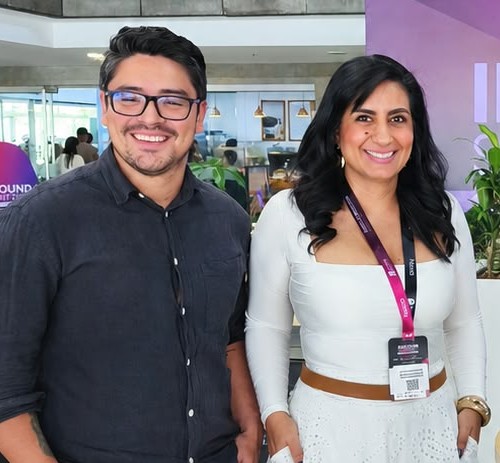
I spent two days at Plaza Mayor in Medellín for Inbound Summit 2026, organized by Triario and Puntos Colombia and backed by HubSpot and Snowflake. With over 1,500 attendees representing more than 700 companies, one underlying truth echoed across every stage: artificial intelligence is no longer a competitive advantage—it’s the table stakes for doing business.
This article translates those high-level concepts into actionable business decisions, backed by verifiable data and real-world case studies shared by Postobón, Puntos Colombia, The New York Times / The Athletic, and Tienda Nube. If you lead marketing, data, or technology at your company, these are the challenges you need to tackle today.
Before diving into specific case studies, we need to address a structural issue raised repeatedly on stage: companies are spending on tools, not on decision-making capabilities.
Santiago Restrepo from Puntos Colombia put it bluntly during his session, "From Data-Driven to Decision-Driven": only 30% of companies successfully turn their data into truly actionable insights for decision-making. The remaining 70% simply hoard dashboards, software licenses, and databases that no one interprets in time.
This reality reflects broader trends tracked by global research firms:
Deloitte & Oxford Economics (2026 Global Human Capital Trends, surveying over 3,000 business leaders across 15 countries): 93% of corporate AI spending goes toward technology, leaving just 7% for the people responsible for operating these tools and making decisions with them.
McKinsey Global Institute (World Economic Forum + McKinsey, January 2026): AI could add between $1.1 trillion and $1.7 trillion annually to Latin America’s economy by 2030. However, 59% of SMEs in the region—which make up 99.5% of all businesses—are generating no measurable value from the AI they currently use.
Regional Study (720 organizations across 12 countries, including Colombia): While 78% of Latin American companies use AI in at least one business function, only 12% have formal AI governance in place. Notably, companies with established governance frameworks see up to 3.5 times higher ROI.
The Bottom Line: Before buying another software license or building another AI agent, the core question isn't "Which AI should we deploy?" but rather "Who in our organization has the authority and time to turn AI insights into action?" If the answer is "no one in particular," that is the primary problem you need to solve.
Carolina de Bedout’s (Postobón) session, "Immune to the Status Quo: How Postobón Redesigned Its System and Why It Almost Didn't Make It," was the most honest talk of the event regarding what it truly takes to transform a large company. Her starting premise was clear: automating a poorly designed process only produces the same errors, just faster and with fewer people around to catch them in time.
She shared five concrete decisions they made—not as theoretical transformation concepts, but as a practical list of actions taken:
They fixed the system, not the symptoms. They didn't just patch the process; they completely redesigned it.
They built a coalition of teams that had never shared a room. Departments that rarely talk to each other (finance, operations, sales) had to sit together so the AI would have consistent data to work with.
They made the hard choices they had been postponing for months. Real transformation almost always requires an uncomfortable decision that the organization has been actively avoiding.
They changed decision rights, not just processes. A new process is useless if the same people continue to have (or lack) the authority to actually make decisions.
They moved from operating in silos to an end-to-end approach.
Why this matters for your business: No AI project can survive a broken decision-making structure. If your company keeps sales data in one system and customer service data in another without ever connecting the two, an AI agent isn't going to fix that for you. It will simply inherit that exact fragmentation, but with greater speed and far less human oversight.
Puntos Colombia, co-organizers of the event alongside Triario, showcased their "Audience Agent"—an internal tool that reduced the time required to generate and segment target audiences for their 700+ partner companies from four days down to 30 minutes. This isn't just a lab demo; it runs live on the transactional data of Colombia’s largest loyalty program, born from the partnership between Bancolombia and Éxito.
Viviana Restrepo, also from Puntos Colombia, closed her session with a stat that belongs in every marketing brief: according to her presentation, 1.7 seconds is all the time a brand gets to make an impression before a user moves on to the next piece of content, notification, or AI-generated search result.
The Practical Takeaway: Dramatically speeding up response times (from four days to 30 minutes) is only valuable if it serves a clear business goal. Puntos Colombia didn't just automate "audience generation" for the sake of it; they targeted a specific bottleneck that was directly slowing down commercial opportunities for their 700+ brand partners. Before chasing faster execution, pinpoint the exact roadblock stalling actual revenue decisions—rather than simply automating tasks that look easy to streamline.
The session by Claudio Cabrera—Vice President of Newsroom and Audience Strategy at The Athletic (part of The New York Times Company) and former Deputy Director of Audience Strategy (News SEO) at The New York Times—was, for me as a content and positioning lead, the most relevant talk of the event.
His starting point addresses a problem every company with a website faces today, whether or not they sell news: referral traffic from search engines and social platforms is dropping, and users no longer need to visit your site to get an answer. According to data Cabrera presented on stage, The New York Times has over 300 million registered users. Of those, 90% of news subscribers and 60% of sports subscribers were registered users before ever paying. On top of that, 20% of their subscriber base each year consists of win-backs—people who were subscribers at some point in the past. In short: before asking for a sale, the Times invests in building a relationship. The free account registration is the front door.
That philosophy led to the launch of Gift Share: every subscriber receives 10 free articles per month to share with anyone, plus unlimited access to cooking content. The goal wasn't immediate revenue generation, but rather introducing the product to new audiences through the trusted networks of existing subscribers. According to Cabrera, this single feature generated over 3 million weekly users in under a year.
To turn those visits into a returning habit rather than a one-off hit, they created Soccer Pick'em—a football prediction game with a public leaderboard that brings users back repeatedly via notifications and email, without relying on third-party algorithms to surface their content.
This strategy isn't an editorial whim; it directly responds to a measurable trend documented in the Digital News Report 2026 by the Reuters Institute for the Study of Journalism at Oxford University—the world's most cited study on media consumption, surveying nearly 100,000 people across 48 markets:
Trust in news reached its lowest recorded point since tracking began in 2015, dropping to 37% globally.
In Colombia, trust fell to 25%—a seven-point decline from the previous year—amid election cycles and political polarization.
Social media surpassed direct website visits as the primary news source worldwide for the first time in the report's history.
10% of global respondents now use AI chatbots to stay informed, a figure growing rapidly among younger demographics.
Only 17% of users pay for online news, a figure that remains flat despite steep declines in organic web traffic.
The Practical Takeaway for Any Brand (Not Just Media): If your acquisition model relies entirely on organic search traffic bringing people to your site, you are building on a shrinking foundation. The playbook of "offering access before asking for payment" and "building direct habits rather than relying on third-party distribution" isn't limited to journalism. It is the core principle behind every effective lead magnet, free trial, or community strategy.
What changes in 2026 is the urgency: the window for free organic distribution via search and social is closing for everyone at the exact same time.
Melisa Parra from Tienda Nube presented "Agentic Commerce: The Next E-commerce Revolution" with a statement that sums up the shift: "Your next best customer might never visit your website. What are you going to do about it?"
Her argument centers on three questions that, as she pointed out, "no one has fully solved yet":
SEO: If the entity reading your content is no longer a search engine ranking pages, but an AI agent requiring structured data to generate answers, who are you actually optimizing for?
Paid Advertising: How do you serve ads to an intermediary (a purchasing agent) that doesn't view banner ads?
Branding: If consumers never land on your site because buying decisions happen inside a chat or assistant, where and how do you build brand equity?
Data presented during the talk highlights the scale of this transition:
Accenture (global study of 25,500 consumers across 16 countries): 74% of consumers would trust an AI over a friend or salesperson when making a purchase, perceiving the AI's comparison of price, quality, and performance as objective.
Gartner: By 2028, 33% of enterprise software applications will include AI agents capable of autonomous decision-making, up from less than 1% today.
Tienda Nube: As part of a $10 million regional investment in AI, their WhatsApp conversational assistant (Chat Nube) now autonomously handles over 61% of customer inquiries and builds shopping carts in real time directly within the chat.
The Practical Takeaway: Traditional SEO (ranking a URL on Google) and AEO/GEO (Answer and Generative Engine Optimization—ensuring an AI agent cites and recommends your brand) are no longer the same discipline, yet most companies are still funding only the former. Adapting requires three immediate adjustments: implementing structured schema markup across your catalog, establishing a consistent brand presence in sources AI models reference for real-time retrieval (reviews, comparison sites, trade publications), and structuring content into direct Q&A formats that assistants can easily cite.
Beyond individual case studies, Alexánder Arango, CEO of TRIARIO, outlined a central framework—echoed across multiple talks and workshops—on how to drive genuine, non-cosmetic AI adoption within an organization:
The biggest barrier to growth isn't demand; it's cash flow. Market interest isn't the issue—the challenge lies in maintaining the financial and operational discipline needed to sustain investment as AI initiatives mature.
Growth relies on five interconnected fronts: culture, demand, cash flow, sales, and operations. Advancing AI in isolation (such as purchasing software without shifting workplace culture) explains why so many digital transformation projects stall.
Fear of change isn't weakness; it's human nature. The managerial mistake isn't that employees feel uncertain, but failing to design adoption strategies that account for that uncertainty.
Reward outcomes, not suffering. A direct pushback against the "longer hours equal greater value" mindset, which runs counter to the core efficiency promise of AI.
Smaller, highly productive, aligned teams. This isn't about headcount reduction for its own sake, but organizational design: every team member needs stronger business judgment, not just more software.
AI is not free, nor will it be. Any deployment plan that overlooks true operational costs—licenses, usage tokens, data governance, and training—underestimates the project from day one.
The overarching theme of the summit was best captured in a single line displayed on the main stage: "Speed isn't pressure. It's capability."
One of the most practical frameworks from the event—useful as a checklist before approving any AI project—evaluates decisions across four criteria, using reversibility as a compass:
Reversibility: If this goes wrong, can it be undone? How fast, and at what cost?
Pace: Can this decision be made quickly without sacrificing quality, or does it require a longer validation cycle?
Trade-offs: What are we giving up (budget, focus, competing projects) by moving forward with this?
Accountability: Who specifically owns the outcome, good or bad?
Easily reversible decisions can be made quickly with minimal friction. Irreversible ones—such as signing a three-year contract that locks in your data or automating customer-facing processes without human oversight—deserve the deliberation they rarely receive.
The overarching takeaway from Inbound Summit 2026 is that while most companies have already adopted AI, very few are governing it, measuring its impact, or redesigning their core systems around it. That gap is precisely where competitive advantage will be won or lost.
Puedes configurar tu navegador para aceptar o rechazar cookies en cualquier momento. Si decides bloquear las cookies de Google Analytics, la recopilación de datos de navegación se verá limitada. Más información.