




The year 2026 is becoming a milestone of maturity in the digital transformation of organizations. Technology has evolved from being purely operational support into a strategic enabler of business growth, efficiency, and competitiveness.
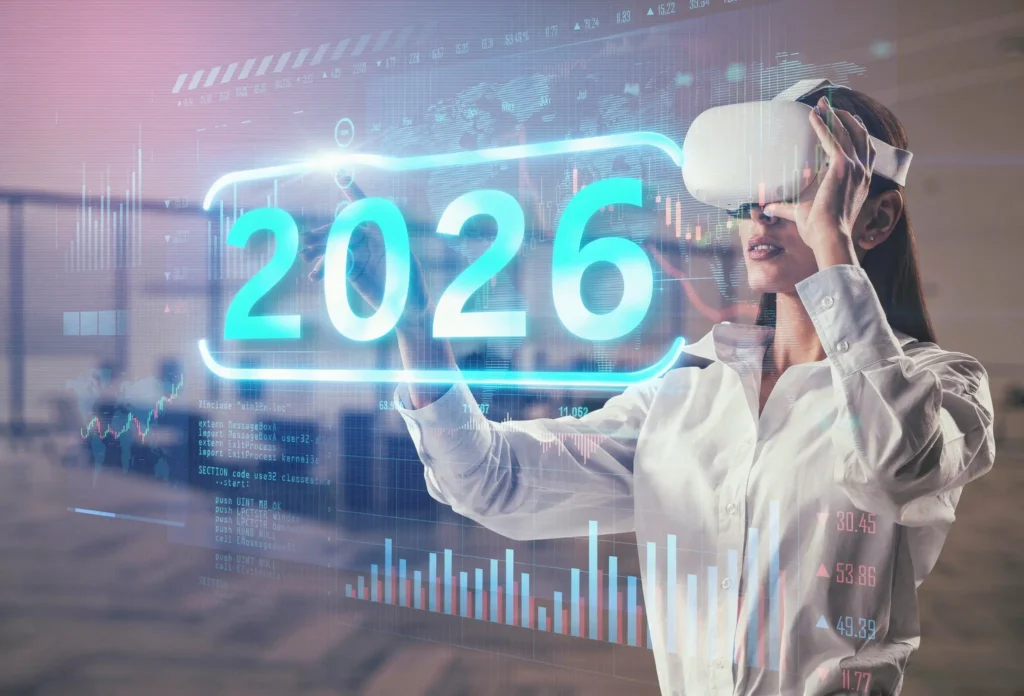
The year 2026 stands as a milestone of maturity in the digital transformation of organizations. Technology has transitioned from being merely operational support to becoming a strategic enabler for growth, efficiency, and corporate competitiveness. Artificial intelligence, advanced automation, data analytics, and new software development paradigms are redefining how companies create value and adapt to increasingly dynamic markets.
In this context, specialized IT companies are consolidating their roles as strategic allies for organizations across multiple industries looking to accelerate their digital transformation. Their role extends far beyond technical execution: they guide companies in the design, development, and assurance of digital solutions that directly impact operational efficiency, user experience, and data-driven decision-making.
From sectors such as banking and financial services, retail, telecommunications, healthcare, energy, and education to digital-native companies, the demand for robust solutions continues to grow. In this scenario, Q-Vision Technologies has built a value proposition centered on:
Quality as a cross-functional pillar.
Constant technological innovation.
The ability to evolve alongside business needs.
The integration of specialized talent, agile methodologies, and emerging technologies.
This article provides an in-depth analysis of the leading technology trends for 2026, offering a practical, business-oriented perspective aligned with the real-world challenges faced by digital companies operating in highly competitive and ever-changing environments.
Software development in 2026 will be marked by the need to deliver faster, more secure, and highly scalable solutions. Organizations are seeking to reduce time-to-market without sacrificing quality, which is driving the adoption of new tools, architectures, and methodologies.
Artificial Intelligence has become a permanent co-pilot for developers. AI-based tools enable code generation, functionality documentation, early error detection, and real-time architectural suggestions.
Thanks to this approach, development teams can focus on solving complex problems and designing business-aligned solutions, while AI handles repetitive tasks. This results in shorter development cycles, greater code consistency, and a reduction in human error. Furthermore, AI facilitates the adoption of practices such as test-driven development (TDD), automatic technical documentation generation, and predictive analysis of technical risks.
Low-code and no-code platforms continue to evolve and gain prominence in 2026. These solutions allow non-technical profiles to actively participate in the creation of applications, accelerating innovation and reducing exclusive reliance on development teams.
The integration of AI into these platforms enables the generation of flows, interfaces, and business rules from natural language. This drives greater collaboration between business and technology units, improving organizational agility.
The cloud remains the pillar of modern software development. Cloud-native architectures, based on microservices and containers, allow applications to scale flexibly and respond quickly to changes in demand.
The adoption of DevSecOps practices integrates security from the earliest stages of development, reducing vulnerabilities and strengthening application reliability. This approach is key for companies operating in highly regulated environments or with high user volumes.
In 2026, platforms designed from the ground up to work with artificial intelligence are emerging. These AI-First environments do not just assist the developer; they actively participate in the planning, execution, and optimization of software development.
AI analyzes the project context, learns from previous iterations, and proposes continuous improvements, allowing teams to work more efficiently and strategically.
Quality Assurance (QA) is evolving from an operational function to a strategic business pillar. In 2026, software quality directly impacts user experience, operational continuity, and brand reputation.
Artificial Intelligence enables the automation of test generation, execution, and maintenance. Intelligent testing agents identify defects, prioritize risks, and adapt test cases to changes within the application in real-time.
This increases test coverage and reduces execution times, ensuring more reliable deliveries without increasing operational costs.
The surge in automatically generated code presents new challenges. Although AI accelerates development, the resulting code must be validated to ensure it meets security, performance, and business alignment criteria.
The role of QA is strengthened as the guarantor of software reliability, validating that solutions function correctly in real-world scenarios and not just under ideal conditions.
Modern QA tools incorporate intelligent defect analysis, allowing for the identification of patterns, root causes, and historical trends. Self-healing tests reduce maintenance efforts by automatically adjusting to changes in the interface or the system’s logic.
This approach frees up time for teams to concentrate on strategic testing and continuous product improvement.
In 2026, QA is fully integrated into DevOps pipelines. Every code change is automatically validated through functional, performance, and security tests.
Quality is also measured against business metrics such as user experience, availability, and response times, turning QA into a true competitive differentiator.
Data has solidified its position as one of the most valuable assets for digital organizations. The ability to transform information into actionable knowledge marks the difference between industry leaders and those who fall behind.
Modern data architectures enable the integration of multiple sources while ensuring governance, quality, and accessibility. Models such as Data Mesh and Data Fabric facilitate decentralized access to reliable information aligned with business objectives. These approaches allow for real-time analysis and a comprehensive, 360-degree view of the organization.
Artificial Intelligence now allows users to interact with data using natural language. This democratizes access to information and accelerates decision-making across all levels of the organization. Users can generate reports, explore key performance indicators (KPIs), and discover insights without being exclusively dependent on technical teams.
Streaming analytics and predictive models allow organizations to anticipate events, optimize processes, and personalize experiences in real-time. Organizations adopting this approach react faster to market shifts, improve customer experience, and optimize their operations through autonomous or semi-autonomous agents.
Trust in data is fundamental. In 2026, companies demand explainable and traceable models that align with privacy regulations and information security standards. Data governance has transitioned from a back-office requirement to a strategic component of any advanced analytics initiative.
In 2026, Artificial Intelligence (AI) moves beyond simple automation to become a collaborative partner. The focus shifts from what AI can do to how it can do it responsibly, autonomously, and across multiple formats.
Generative AI is evolving toward a multimodal approach, capable of processing and generating text, images, audio, and video simultaneously.
This allows organizations to automate complex processes, create high-quality content, and analyze multifaceted information comprehensively. For example, a multimodal system could analyze a recorded customer service video call, summarize the transcript, and automatically generate a visual sentiment report.
AI agents are stepping up to execute operational and analytical tasks autonomously. Unlike traditional bots, these agents can optimize processes and generate actionable recommendations in real-time without constant human prompting.
This autonomy liberates human teams to focus on high-value activities such as strategy, creativity, and innovation, while the agents manage the technical and repetitive execution in the background.
Responsible AI use is the cornerstone of sustainable adoption. In 2026, organizations are prioritizing explainable and controllable models that align with ethical principles and international regulations. Building trust is no longer a PR move—it is a technical requirement. Companies are investing in "AI Guardrails" to ensure that automated decisions are unbiased and traceable.
The true value of AI emerges when it amplifies human talent. The most successful companies will not be those that replace people with machines, but those that strategically integrate both.
This collaboration creates a synergy where human intuition and empathy meet AI’s processing power and speed, redefining the limits of what a digital organization can achieve.
The technological trends of 2026 redefine how companies develop software, ensure quality, and make data-driven decisions. The synergy between artificial intelligence, advanced automation, and human talent is the definitive key to competing in an increasingly demanding digital landscape.
Organizations that rely on technological allies with proven experience, strategic vision, and a relentless focus on quality will be better positioned to face the challenges of the future. As demonstrated by Q-Vision Technologies through its trajectory in large-scale digital transformation projects, the path to success lies in integrating innovation with operational excellence.
Are you ready to prepare your company for the technology trends of 2026? With the backing of a specialized ally like Q-Vision Technologies, you can drive innovation, optimize your technical processes, and move confidently toward the digital future.
Explore Our Services and take the next step in your digital transformation.
The concepts and statistics presented in this report are based on recent analyses from industry leaders such as Gartner, Microsoft, IBM, and top-tier consultancies. Q-Vision’s proprietary solutions—including IzyDev and IzyTesting—exemplify the practical application of these trends in real-world business environments.
This article integrates updated insights (2024–2025) regarding emerging tools, methodologies, and platforms in software development, QA, data analytics, and AI to provide a comprehensive vision of the landscape expected for 2026.
Puedes configurar tu navegador para aceptar o rechazar cookies en cualquier momento. Si decides bloquear las cookies de Google Analytics, la recopilación de datos de navegación se verá limitada. Más información.