




Amid the greatest technological disruption in decades, artificial intelligence is accelerating processes, automating tasks, and redefining how software systems are built and managed.

El 6 de octubre, el Banco Mundial. El 20, la CEPAL y el Centro Nacional de IA de Chile. Dos mediciones distintas llegaron a la misma conclusión: el cuello de botella no está en la herramienta, sino en la capacidad de las organizaciones para absorberla. Un concepto académico de 1990 ordena lo que hoy describen los números.
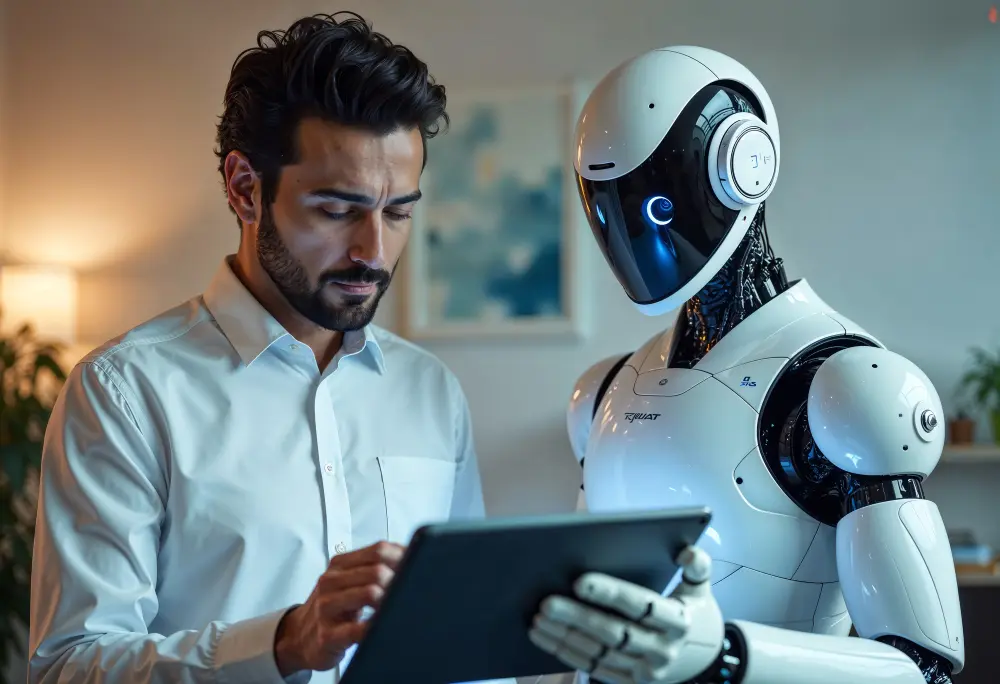
The numbers speak for themselves: 99% of tech leaders worldwide expect part of their code to be AI-generated within the next three years (Gartner, 2024). More than half estimate that between 30% and 50% of their teams’ technical work will be automated.
But in this race, the winner won’t be the one with the most algorithms, but the one with the best people. Even as machine autonomy grows, 88% of industry leaders acknowledge that human capabilities remain irreplaceable.
Adopting AI is far more complex than simply installing tools—it requires preparing teams that can understand it, question it, and evolve with it. Without adaptive talent, digital transformation isn’t sustainable. And without a clear training strategy, even the most advanced technology becomes an empty promise.
Failures in digital transformation rarely come from choosing the wrong technology—they come from teams that aren’t prepared. According to McKinsey (2024), 70% of digital initiatives fall short of their goals, largely due to talent gaps. In contrast, organizations that invest in people, not just infrastructure, are the ones that truly succeed in adopting new technologies sustainably.
In other words, AI is changing the what and the how, but the real disruption happens in the who. This means training can no longer be a once-a-year event. Learning must be continuous, contextual, and relevant. It has to evolve at the same pace as technological change.
The rise of tools like GitHub Copilot, Replit Ghostwriter, and Amazon CodeWhisperer shows that development environments are changing fast. But none of these technologies create value on their own. It all comes down to the level of understanding and mastery of the people who use them.
A Deloitte report (2023) found that companies with strong upskilling strategies are 2.4 times more likely to achieve their digital innovation goals. Trained talent doesn’t just keep pace with change—it leads it. And in that leadership lies the key to making AI not just a productivity tool, but a true source of competitive differentiation.
At Q-Vision Technologies, this vision isn’t new. For years, the organization has understood that successful technology adoption isn’t built on infrastructure alone, but on well-directed training. Instead of reacting to the explosive rise of AI, Q-Vision anticipated its impact by building a strong ecosystem of talent and continuous learning.
Through IT Talent, we designed a model to identify, attract, train, and scale top-tier technical profiles aligned with the ever-changing needs of the tech industry.
With IzyAcademy, we created a continuous learning platform that not only updates technical knowledge but also integrates essential soft skills such as critical thinking, AI ethics, and adaptive leadership.
These approaches have accelerated the integration of technologies like automation and AI applied to quality assurance—without compromising quality or relying solely on external talent. Q-Vision didn’t wait for market pressure; it saw the future coming and got ready.
The difference between a company that simply implements AI and one that truly innovates with AI lies in the type of talent it cultivates. Today, organizations need professionals who can renew their skills every six months, understand the business impact of each tool, and adapt to new demands such as prompting, validating AI-generated results, auditing algorithms, and designing human experiences enhanced by technology.
This is where many companies fall short: they believe they can solve these challenges by hiring external experts. But the real differentiator is built from within—through permanent learning structures that empower teams to evolve without friction.
Organizations that deliberately embrace evolutionary talent will be better prepared to face what’s coming: technological interoperability, emerging regulations, ethical data governance, and new forms of human–machine collaboration.
The AI-driven technological revolution is not simply about which tools are adopted, but about how people are prepared to work with them. Talent remains the engine behind every sustainable transformation, and strategic training is the only path to ensure it evolves in step with artificial intelligence.
Companies aiming to adopt technology in a deep and lasting way should:
Implement continuous training programs directly connected to real business tasks.
Align these programs with critical functions such as software development, quality assurance, data science, and solution architecture.
Promote cross-organizational learning, especially in leadership roles.
Foster partnerships with educational platforms, universities, and talent transformation experts such as IzyAcademy.
At the end of the day, what makes a transformation sustainable is not how much AI a company has, but how well-prepared its people are to transform with it. In times when everyone is betting on technology, betting on talent is the truly forward-looking move. And at Q-Vision, we understood this years ago.
Puedes configurar tu navegador para aceptar o rechazar cookies en cualquier momento. Si decides bloquear las cookies de Google Analytics, la recopilación de datos de navegación se verá limitada. Más información.